Before the Lorry Turns the Corner: The Five-Minute Bin-Day Data Game
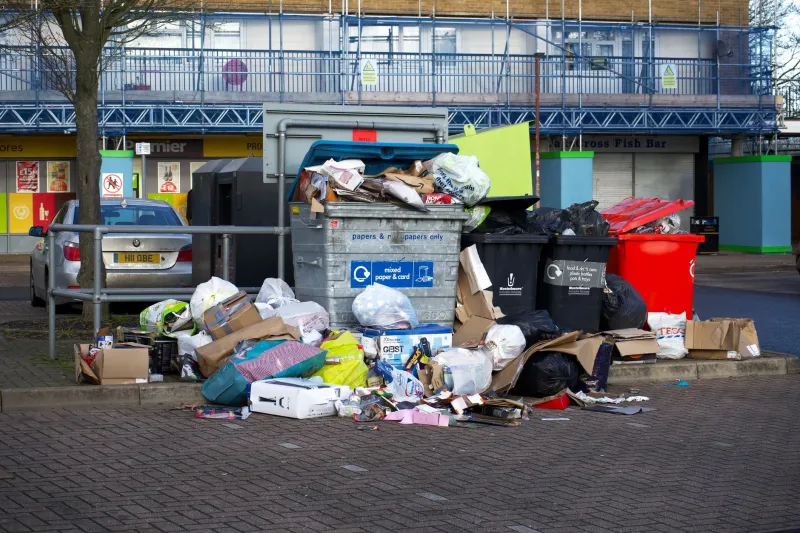
There's a free data set at the end of your front path, and it turns up once a week whether you're ready for it or not. Bin day is the most dependable slice of randomness in a child's week: one big lorry, a fixed route, a handful of variables, and a result you can check against your own guess within about ninety seconds.
That's the whole idea here. Not a printed grid, not an app, not a laminated worksheet with a picture of a wheelie bin in the corner. Just a prediction, a tally and a squint at what actually happened — a street-side maths challenge you can run from the window, the doorstep or the pavement in the time it takes to finish a mug of tea.
Why the recycling round is better than a workbook
Real data has texture. It arrives late, it contradicts itself, and it never quite does what you expect. When a child predicts that the crew will start at number 14 and they actually start at number 2 because of a parked van, that's not a failed exercise — that's the moment data handling stops being an abstraction and becomes a small, satisfying mystery.
There's also the scarcity factor. You get one shot a week. A worksheet offers forty questions, so children pace themselves accordingly. Bin day offers a single, unrepeatable event, and most kids concentrate considerably harder when they know the lorry isn't coming round again for another seven days.
What you need (and what you can cheerfully skip)
- Chalk, a small notebook, or the back of an envelope
- Something flat to lean on — a clipboard, a book, a tray
- A pencil that hasn't been chewed to death
- Optional: a phone timer, if you want to record arrival times
Skip the printed tally sheets and the sticker rewards. The lorry is the reward. Handing out a sticker for watching a bin lorry is like paying someone to eat cake.
Step one: the two-minute prediction
Before anything rumbles into view, ask for three guesses and insist they're written down. Memory is where data games quietly cheat, and children will absolutely claim they "knew it all along" if you let them.
Good predictions for a first go:
- Which house on your side will be emptied first?
- How many wheelie bins are out on the street in total?
- Will the crew empty a recycling bin or a general waste bin first?
Older children can add a timing guess — how many minutes past seven will the lorry appear? — or a trickier one: will the crew have to reverse at any point? Have a quick look at your council's published round information if you like, but guessing is the entire point. Don't spoil it with research.
Step two: the tally
This is the bit that takes genuine concentration. Two columns on the page, and tally marks in gates of five, because counting in ones while a lorry is moving is a recipe for losing your place halfway down the street.
Count what you can actually see and verify:
- How many bins of each colour go out (in most UK councils that's a mix of recycling, general waste, garden and food waste — check your own authority's scheme, because they differ wildly)
- How many bins have lids that won't quite shut
- How many were already waiting at the kerb before the crew arrived, and how many appeared in a panic at the last second
That last one is quietly brilliant, because it produces a small, unexpected finding: your street has a personality, and it's mostly "leave it until you hear the engine".
Step three: the reckoning
Back inside, score the predictions. Keep the scoring generous and concrete. If a child said fourteen bins and the real answer was nineteen, they were five out — and saying it that way is far more meaningful than marking a cross. You've just introduced the friendliest possible version of estimation error, and most children find it genuinely satisfying rather than deflating.
Then ask the question that turns counting into statistics: what surprised you? Nine times out of ten the answer is more interesting than the chart.
From chalk marks to actual charts
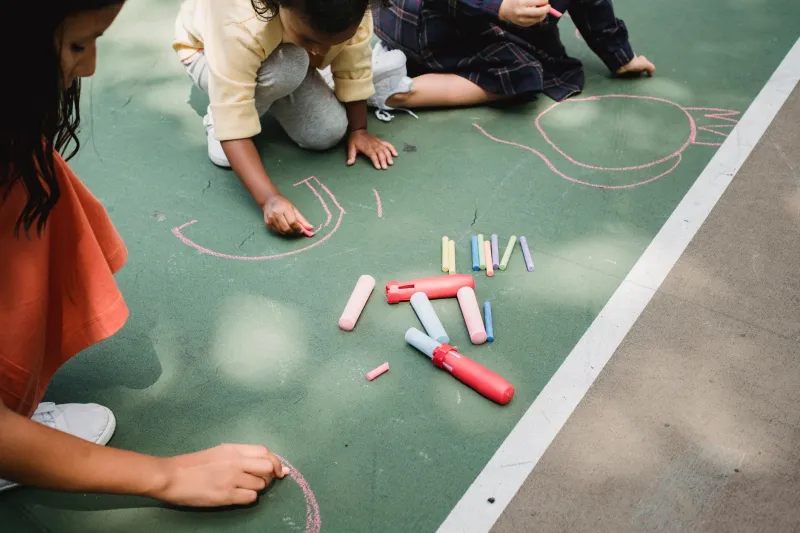
If you have a drive or a patio, chalk a bar chart straight onto it: one bar per bin colour, height equal to the tally. It's big, it's physical, and it gets corrected in the open air rather than rubbed out in shame.
Inside, a pictogram works well, as does a single scruffy bar chart on the back of the envelope. Then ask the question that separates real data handling from colouring in: what does this chart not tell us? It doesn't tell you how full the bins were. It doesn't tell you who put theirs out late. It can't tell you why the crew skipped number 31.
Chance questions that aren't pretend
Skip the coloured counters and use the street. Ask for the right vocabulary — certain, likely, even chance, unlikely, impossible — against things that genuinely could go either way:
- Will the crew stop for a chat with a neighbour?
- Will a bin blow over before they reach it?
- Will the recycling lorry be the one that arrives first?
Then start a five-week log of arrival times. Children who've only ever seen one bin day assume "half past seven" is a fact; five weeks of data will show them it's a range. That reveal lands beautifully, and it costs you one line in a notebook per week.
The weight question, for the ambitious
Estimating weight is a lovely stretch for Key Stage 2. Councils publish tonnages, and average household recycling figures are easy to find. Anchor it in something a child can hold: a bag of sugar, a bag of dog food, a full watering can. Then ask how many average bins they reckon it would take to fill a small van. Nobody needs the exact answer — the reasoning is the maths.
Make it a street thing
A chalk chart on the drive gathers neighbours. A tally taped inside the front window gathers questions. If you have a street group chat, post the week's numbers — total bins, first house, arrival time — and you've accidentally started a longitudinal study with a postcode. Whole-street data is far richer than one household's, and children notice that instantly.
Teachers can run the same game on a school site: one class per key stage, block graphs for the youngest, line graphs of arrival times and five-week averages for Years 5 and 6, and a big display in the hall showing what the whole school found.
Keep it safe and neighbourly
Watch from the pavement, not the road. Stay behind the gate if your street is busy, put something bright on in the winter gloom, and never approach the crew mid-lift — they're working, and a wheelie bin swinging over a shoulder is not a teaching moment. Don't block the pavement with your chart, and do say thank you. The round never stops, and next week's data is already on its way.