The Sky Is the Scoreboard: A November Weather League for Young Mathematicians
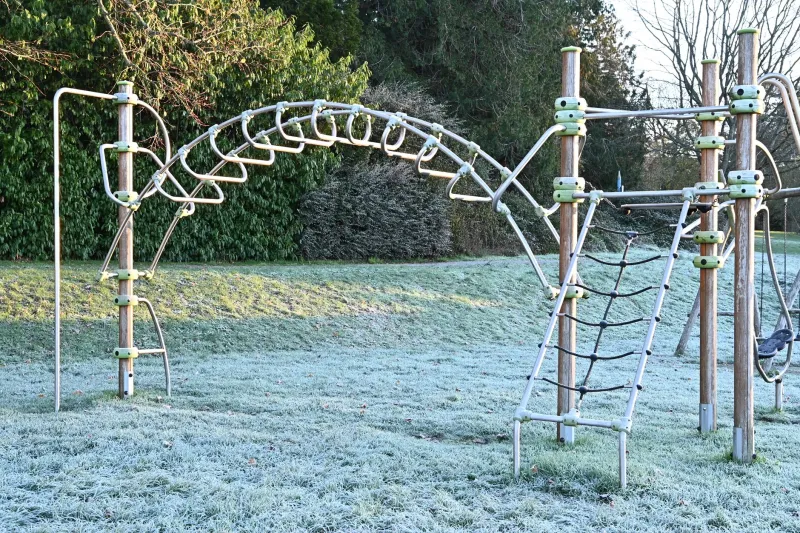
November playgrounds have a reputation problem. The benches are damp, the leaves are slippery and the sky looks like it has been left on a low light setting since half term. But that same unreliable weather is a ready-made maths resource. Instead of waiting for a dry, bright day that never arrives, put the drizzle to work.
The idea is simple: build a tiny weather station from classroom odds and ends, then run a five-minute daily data ritual. Children read the instruments, record the numbers, make a forecast for tomorrow and score points when the sky agrees with them. It is screen-free, whole-class and squarely aimed at KS2 statistics and measurement. Better still, it gives wet-break days a purposeful job rather than a scramble for the colouring tray.
Set Up a Three-Instrument Kit
You do not need a science budget. A clear plastic bottle, a ribbon and a thermometer will do most of the heavy lifting.
The rain gauge. Take a clean 1.5-litre bottle and ask an adult to cut off the top third. Turn that top section upside down and slot it into the base like a funnel. Tape the join firmly. Use a waterproof marker and a ruler to mark centimetres up the side, starting from the flat bottom. Place the gauge away from walls, fences and overhanging branches, and weigh the base down with a few stones so it does not audition for a role in The Wizard of Oz during playtime.
The wind flag. Tie a length of ribbon or a strip of old PE kit to a bamboo cane or a secure fence post. Add a simple compass rose on the ground beneath it — or paint N, E, S and W on four stones. Children can then describe wind direction in words rather than guessing. If the ribbon hangs limp, that is a valid reading too: calm.
The temperature chart. A standard classroom thermometer works well if it lives in a shaded, ventilated spot, not in direct sun against a brick wall. Fix a laminated chart nearby with columns for date, temperature, rainfall, wind and sky type. Add a pencil on a string. The string will disappear, but it is a nice thought.
Keep the whole set-up low and accessible. No glass, no sharp edges and no climbing. The weather station should be a five-minute stop, not a risk assessment epic.
The Five-Minute Daily Ritual
The magic is not in the equipment. It is in doing the same small thing every day until it becomes a habit.
Choose a fixed time — just before lunch works well — and give four children rotating jobs. The Reader calls out the rain gauge measurement in millimetres, the temperature in degrees Celsius and the wind direction. The Recorder writes the numbers on the chart and adds a tally mark to the correct rainfall band: none, a smudge, a steady drizzle or a proper soaking. The Forecaster looks at the sky and makes three predictions for tomorrow using the same bands. The Checker confirms the units and asks the killer question: ‘Is that millimetres or centimetres?’
That is it. Five minutes, maybe six if a gust takes the chart off the wall. Over a week, the class builds a small but genuine data set. Over a month, they have enough to graph, compare and argue about.
Turn Readings Into a Weekly Score
On Friday, spend fifteen minutes turning the week’s numbers into a league table. This is where the game sharpens.
First, total the rainfall. Then find the average temperature — mean for Year 5 and 6, with plenty of support for younger children — and identify the most common wind direction. Ask children to spot the range: how many degrees separated the mildest and coldest readings? Which day was wettest, and by how much?
Then reveal the forecast scores. Award three points for an exact match on rainfall band, one point for a neighbouring band and zero for a miss. Do the same for temperature and wind. Add the class total to a running ‘sky score’ on the wall. Keep it light. The point is not to produce miniature meteorologists but to make prediction feel like part of the maths, not an afterthought.
A weekly title — Forecasters of the Week — costs nothing and gives the ritual a bit of theatre. Children who predicted badly are not out of the game; next week is a fresh chance to read the clouds.
Make It a Game, Not a Chore
A few small twists keep the daily stop from becoming another worksheet with wellies on.
- Drizzle deductions. Ask questions that use the data: how many millimetres fell altogether? If a puddle is two centimetres deep, how many days of this week’s average rainfall would it take to fill it?
- Sky bands. Let children invent names for rainfall bands, then defend their choices using the numbers. ‘Spitting’ and ‘proper November’ are both valid if the thresholds are clear.
- Mini graphs. Every Friday, add one point to a class line graph for temperature and a bar on a rainfall chart. By the end of the month, the display tells a story.
- Wet-break data HQ. When playtime is indoors, give a small group the job of updating the chart from window observations, checking the forecast scores or writing three questions for the class to answer.
Where It Fits the Curriculum
This is not a bolt-on. It is KS2 statistics and measurement doing circuits in the fresh air. Children tally, record frequencies, calculate totals and averages, read scales, choose suitable units and interpret line graphs and bar charts. They also meet uncertainty — the idea that a forecast is a reasoned guess, not a promise. That is a mature mathematical idea dressed up as a playground game.
For younger or less confident children, keep the focus on tallying sky types and reading the thermometer to the nearest mark. For older pupils, add mean, range and simple comparison between weeks. Everyone can take part in the same five-minute ritual at their own level.
A Few November Practicalities
Secure the rain gauge before stormy days, empty it after heavy rain if it fills past the scale, and bring the thermometer inside during frost if your school site is exposed. If a reading is missed, record ‘no data’ and move on. Real data sets have gaps; pretending otherwise teaches the wrong lesson.
By the end of November, your class will have a scruffy but honest weather log, a graph with actual shape and a shared vocabulary for drizzle, wind and temperature. The sky will still be grey. But it will also be the scoreboard — and that is a much better reason to look up.