Small Change, Big Sums: Build a Christmas Fair Stall That Teaches Itself
In November 2026, the Christmas fair planning emails start flying and someone somewhere is already asking who has the float. A primary school fair is usually a blur of tinsel, cling film and a lost tub of 20p coins. But tucked between the cake stall and hook-a-duck is a genuinely good maths lesson waiting to be run by children rather than adults. The trick is to design a stall where the maths is visible, spoken and slightly messy — and then resist the urge to take over with a calculator.
Pick a game with a number in its bones
A good fair stall asks a question. Guess-the-sweets asks children to estimate quantity. Roll-a-six asks them to think about probability. A tombola with a twist asks them to explain odds to a queue of people in coats. Choose one main game and one side job, such as tally keeper or change checker, so every child has a role. A Year 5 pupil can run the jar. A Year 4 pair can manage the 50p change pot. A rota of Year 6s can keep the running total and hand over notes at the end of each shift.
The adult job is to set the boundaries, not to do the sums. Cash security, safeguarding, allergen checks and prize safety stay with grown-ups. The arithmetic belongs to the children.
The jar is an estimation problem, not a decoration
Before the fair, fill the sweets jar by counting in groups of ten and record the total in a sealed envelope. Do not tell anyone the number. On the day, charge 50p a guess and give each customer a slip for their name and estimate. Keep the slips in a box rather than on a display board, so later guesses are not influenced by earlier ones.
After the fair, tip out the slips and work out the mean, median and range with a small group. Ask: were guesses clustered around a sensible number? Did people overestimate because the jar looked wide? Did the winner use a strategy, such as counting a row and multiplying? This is data handling with a sugar coating, and it gives children a reason to care about averages that a worksheet rarely manages.
Roll-a-six: probability you can hear
Roll-a-six is simple: roll a six to win a small prize. Charge 30p a go. Before the fair, ask a group to predict the takings. If they expect 240 rolls at 30p, that is £72. If the probability of a six is one in six, they might expect around 40 winners. If each prize costs 40p, expected prize cost is about £16, leaving around £56 before other costs. Do not turn this into a lecture. Let children work it out on a whiteboard and write their prediction on a piece of paper.
During the fair, keep a tally of rolls and sixes. Every 20 minutes, a child can update the running count. The gap between prediction and reality is the lesson: a short run might produce more sixes than expected, or none for ages. That is not a failure of the game. It is probability being real.
Tombola with a twist: odds and honesty
A standard tombola is fine, but a twist makes the maths more interesting. Try tickets ending in 0 or 5 winning a small prize, or every fifth ticket winning. Children can explain the odds to customers: one in five, or two in ten. Keep a simple board showing tickets sold and prizes left. That is ratio and proportion in public, with a queue watching.
Adults should check that the odds are fair and the prizes are safe and suitable. Children should do the explaining. If a customer asks whether they are likely to win, a child can say what the odds are without promising anything. That is a useful life skill as well as a maths one.
Money handling: the float, the change and the tally
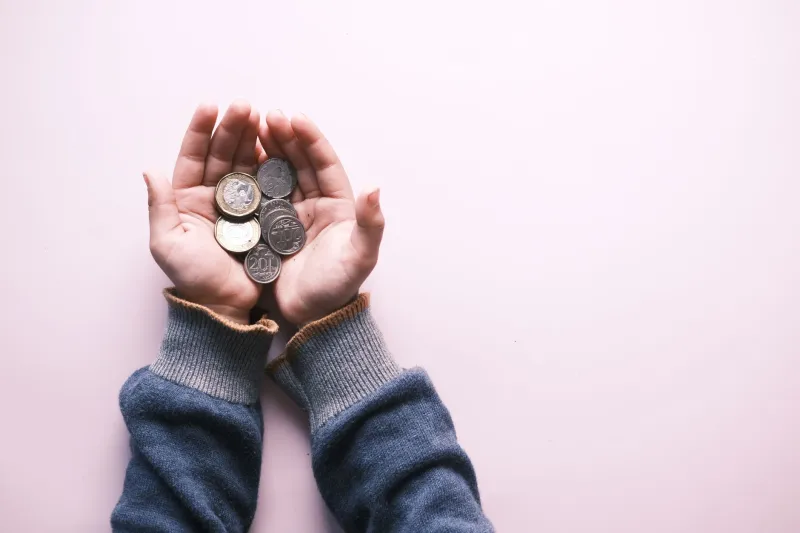
Use a float of about £20 in coins rather than notes. Choose price points that force change: 50p, 70p, £1.20. Give children a change mat or a number line and let them work out the change before handing it over. On the stall, one child takes money, one gives change, and one marks a tally. Rotate every 20 minutes so nobody gets tired or flustered.
Adults handle disputes, security and any tricky customer conversations. They should not silently correct every sum. If a child gives the wrong change, the customer will usually notice, and that is a real consequence. A quiet word afterwards is better than taking over in the moment.
A planning checklist for PTA and teachers
- Decide the maths question before the theme: estimation, probability, odds or money handling.
- Put a named adult in charge of cash security and the float.
- Make a simple tally sheet with columns for rolls, guesses, tickets or sales.
- Write a one-page rules card so every helper gives the same explanation.
- Prepare a sealed prediction from the children before the fair.
- Have a short maths moment script: ask customers to estimate before they pay.
- Keep prizes low-value and check allergens and age suitability.
- Brief helpers to ask 'What do you think?' instead of giving the answer.
- Plan a 10-minute debrief slot for the following week.
- Keep a receipt book or simple record of takings for the PTA treasurer.
After the fair: the debrief does the teaching
Count the takings, compare them with the children's predictions and look at the tally sheets. Ask: what surprised you? Where did our estimate go wrong? Did more people guess high or low? How many sixes did we actually roll? What would you change next time?
Turn the answers into a short class report, a display or a few slides for assembly. This is the part that turns a stall into a lesson. Do not skip it because everyone is tired and eating leftover cake.
Keep it imperfect
The best stall is not the slickest. It is the one where a child says, 'I think it is about 240 sweets because there are ten rows of twenty-four', and another says, 'But the jar is wider at the bottom.' That conversation is worth more than a completed worksheet. Small change, big sums — and a fair that leaves a little maths behind.