The Advent Light Census: A Dark-December Data Walk for Families
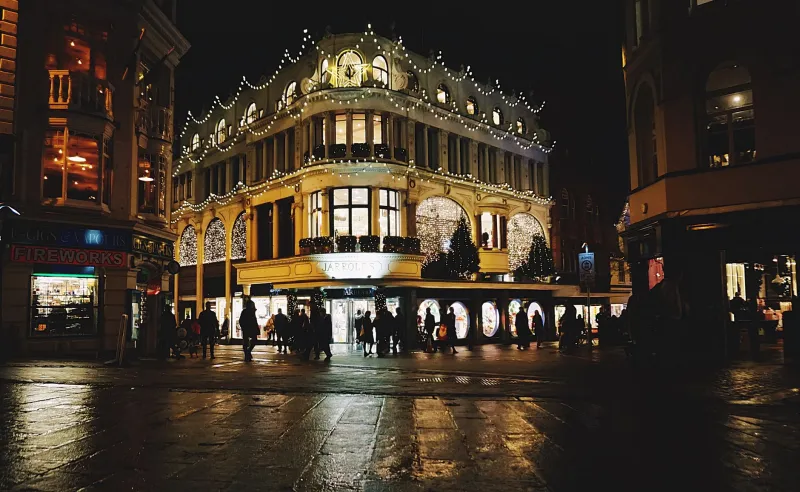
December evenings have a way of turning ordinary streets into a free exhibition. One house goes full icicle, another sticks to a single glowing star, and a third has a cheerful tangle of multicoloured bulbs that looks like it was installed by a very excited squirrel. It is tempting to just walk and admire. But with a clipboard and a little planning, that same walk becomes a maths game: a light census that makes data handling feel like a neighbourhood story.
This is not about counting every bulb on every house. It is about noticing, sorting, estimating and comparing — the quiet skills behind charts and tables. At Math Playgrounds, we like maths that starts with a game and lets the numbers catch up later. A dark-December light walk does exactly that.
Why Christmas lights make such good data
Data handling can feel abstract on a worksheet. Five apples, eight pencils, a bar chart about favourite fruit. Real streets are messier and more interesting. Children can choose what to record, decide how to tally it, and argue politely about whether a glowing snowman counts as a shape or a bulb. That sort of chatter is data literacy in disguise.
A light walk also gives you natural categories: colour, shape, number of lit windows, strings versus single bulbs, warm white versus cool white. You can keep it as simple as tallying red lights for a five-year-old or as involved as estimating bulbs per metre for a ten-year-old. The same route can work for both.
Pack a five-minute kit
You do not need much. A clipboard or a hardback book, a pencil, a rubber, a small torch and a printed scorecard are enough. Add reflective bits if you have them — a bright coat, a tabard, a bag tag — and point the torch at the pavement rather than into windows. A flask is optional but very December.
Plan a short route: one or two streets, pavement only, crossing at safe points. The aim is a comfortable 20 to 30 minutes, not a marathon. If the weather turns, you can always retreat home and chart what you have.
The printable scorecard
Print one per child, or copy this into a notebook. The point is not neatness. The point is having a place to put tallies before they evaporate.
| Stop | Colour tally (red, gold, blue, green, white) | Shape tally (star, bulb, icicle, other) | Estimated bulbs | Notes |
|---|---|---|---|---|
For younger children, you might shrink this to two columns: colour and tally. For older children, add a column for 'lit houses on this street' so they can compare streets fairly later.
KS1: spot, tally, choose
For ages five to seven, keep the focus on noticing and choosing. Ask them to pick one colour — perhaps gold — and tally every house that shows it. Count the stars on three houses. Which shape is winning so far? Which street has more blue lights, this one or the next one?
Adults can scribe the tallies while the child points and counts. At the end, make a human bar chart: one person stands for each gold house, or use fingers and a quick line of pebbles on the pavement edge. Ask simple comparison questions: more or fewer, most or least, same or different. Fifteen minutes of this is plenty.
KS2: estimate, compare, predict
For ages seven to eleven, add estimation and comparison. Choose one lit string and count a short section — say ten bulbs — then estimate the whole string. Compare two streets of similar length. Count the number of houses as well as the lights, so the comparison is fair. A street with three houses and thirty lights is a different story from a street with ten houses and thirty lights.
Older children can build a frequency table for colours, work out the average number of estimated bulbs per lit house on their route, or make a prediction: which street will have more lights next time, and why? The best question is often the one with no tidy answer: what does our count leave out? Houses with no lights, lights hidden behind curtains, or decorations that are switched off.
Make the comparison fair
If you are comparing streets, keep the rules consistent. Walk the same length of road at the same sort of time. Decide together what counts as a lit house — any outdoor light, or only decorations? Do car headlights count? Shop signs? Probably not, but let the children decide and write the rule down.
Tally in fives to avoid a forest of single marks. Stop when fingers are cold or attention has gone. A short, cheerful census beats a long, grumpy one. And if someone wants to abandon the tally and just enjoy the lights, that is allowed too. The maths will still be there next time.
Back home: the kitchen-table chart
Once indoors, tip the data onto the table. Draw a simple bar chart for colour totals, shape totals or lit houses per street. Label the axes, give it a title, and let the child explain what they notice. Sticky notes are excellent for making a quick chart on a cupboard door.
Ask a few playful questions: which colour would win if we walked one more street? How many more gold lights than blue? What surprised you? For younger children, a pictogram with drawn bulbs works nicely. For older children, a two-way table of colour by street can be a satisfying next step.
Safety and neighbourly sense
An adult should lead the route, especially near crossings. Wear something bright, keep torches low, and avoid touching lights, cables or fences. Respect privacy: no close-up photos of homes or people, no peering through windows, no blocking driveways or paths. Keep voices low and treat the lights as a shared bit of neighbourhood joy rather than a puzzle to be conquered.
The win is the question, not the total
The real prize is not a perfect bulb count. It is the moment a child says, 'Our street likes warm white, but the next street likes blue,' or 'That house has lots of lights but only one shape.' That is data handling with a personality. It is maths as a walk, a chat and a small local adventure — exactly the sort of game that belongs on Math Playgrounds.