Buzzer, Spinner, Relay: Eight Quiz-Show Games That Make Times Tables Stick in Year 4

Why turn tables into a game show?
The Year 4 Multiplication Tables Check is short: 25 questions, six seconds each, taken online in June. That brevity can make the build-up feel bigger than the event. If your child is in Year 4 during the 2026-27 school year, the check is likely to fall in June 2027. The last thing they need is months of grim drill.
Game-show formats work because they add repetition without the feel of a test. They create a bit of theatre, give children a role and make wrong answers less personal. The goal is quick recall, not panic. Keep the scoring light, the rounds short and the laughter louder than the timer.
Eight formats to try
1. The Countdown Numbers Round. Put a target number on the board, such as 36. Children choose two or three number cards and find a way to reach it. For tables practice, ask for the multiplication fact that hits the target: 6 times 6, 4 times 9, 3 times 12. This builds flexible recall rather than a single route.
2. Beat the Buzzer. Split the class into small teams. Call a fact and let the first team to buzz answer. Use a six-second timer to match the check's pace. Keep teams to three or four children so everyone gets a turn. Buzzers are optional; hands, shakers or a drum work fine.
3. The Table Talk Show. One child is the host, another is the contestant. The host asks questions in a silly interview style: So, you say you can handle the seven times table? The contestant answers in character. This lowers the stakes for anxious learners and gives shy children a script to hide behind.
4. Wheel of Tables. Make a spinner with the 2 to 12 times tables. Spin, then answer three facts from that table. Points can be awarded for accuracy rather than speed. Differentiation is built in: some children spin 2, 5 and 10; others spin 6, 7 and 8.
5. Crystal Maze-style Challenge Stations. Set up four stations around the hall or playground: dice, cards, dominoes and a whiteboard. Each station focuses on a different table or a mix of facts. Teams rotate every three minutes. The movement keeps energy up and stops one format wearing thin.
6. Top Five Tables. A Family Fortunes-style round. Read out a fact and ask teams to predict which answers the class will find trickiest. Then reveal the actual top five tricky facts from a quick class vote. Teams score points for matching the list, then answer the facts together. It turns common mistakes into discussion rather than shame.
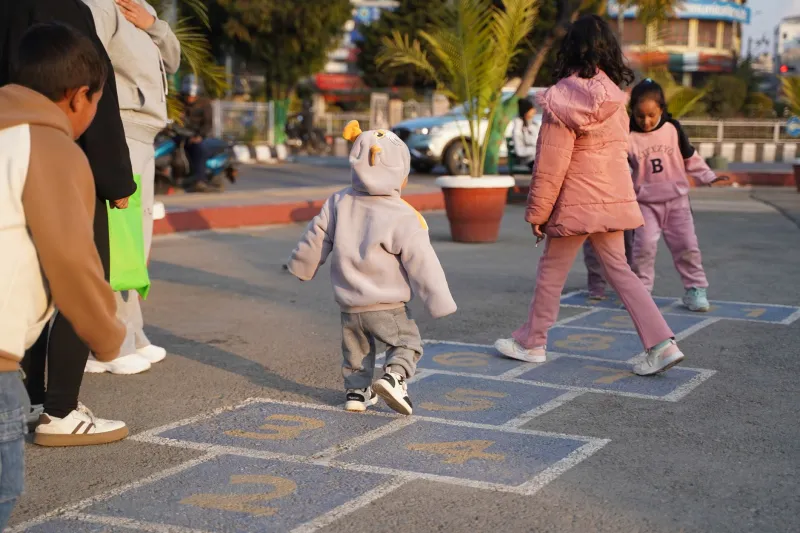
7. The Quick-Fire Relay. In the playground or hall, place cones at one end and a question card at the other. Children run, answer one fact, run back and tag the next player. Use a six-second call-out for each runner. This is active, social and easy to adapt for mixed ability.
8. The Final Countdown. Finish with a whole-class quiz in three rounds: warm-up, speed round and wildcard. The warm-up uses known facts, the speed round uses a six-second timer, and the wildcard asks children to explain a strategy. Keep the final round cooperative so the class wins together.
Timing that works
Little and often beats a marathon. Three ten-minute sessions a week are plenty for most Year 4 children, with a longer game-show session once a fortnight. Always start with facts the child knows well; confidence first, stretch second. Stop while the game is still fun. If the timer is causing tears, put it away and play without it.
Differentiation without drama
Not every child needs the same deck. Some can work on 2, 5 and 10; others can tackle 6, 7 and 8. Offer a multiplication grid as a scaffold, then remove it when the child is ready. Let children answer verbally, with a whiteboard or with cards. Mixed-ability teams work well if roles are clear: reader, runner, recorder, checker.
Avoiding game fatigue
Novelty is a resource, so spend it carefully. Rotate formats rather than playing the same quiz every week. Avoid elimination games where children sit out; the ones who need practice most are often the first to leave. Keep scores low-stakes and celebrate personal bests. Never turn the game show into a public ranking. The check is a snapshot, not a verdict on a child's maths brain.
The final whistle
A good game-show session should feel like a treat with a maths engine underneath. It gives Year 4 children repeated exposure to facts, a safe place to make mistakes and a reason to listen to each other. If the format flops, change it. If a game causes anxiety, drop it. The Multiplication Tables Check is important, but a child who still likes numbers afterwards is the better result.