Measure Twice, Paint Once: A 2026 Audit for School Playground Maths Markings
Every autumn the same scene plays out in staff rooms across the UK. Somebody unfolds a glossy catalogue on the table, points at an enormous hundred square in primary colours, and says: "the children would love that." And they would — for about a fortnight. Then the novelty fades, the paint dulls, and the markings quietly become very expensive wallpaper.
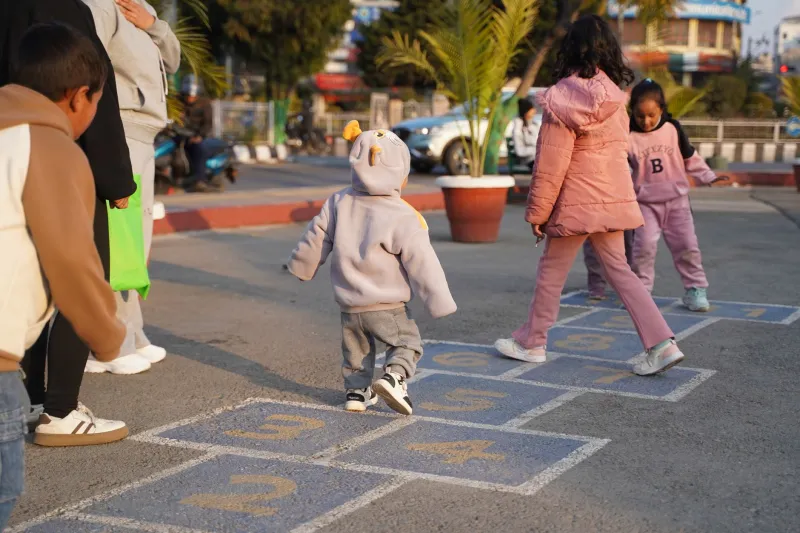
None of this is an argument against outdoor maths markings. A well-placed hopscotch grid, a number track or a target board can do genuine work at breaktime with no adult anywhere near it. The argument is narrower: markings are a purchase. Like any purchase, they deserve a handful of awkward questions before the invoice is signed and the line painter turns up in the Easter holidays.
Here are twelve we would ask, roughly in the order they matter.
Start with the ground, not the design
1. What is actually under the paint? Crazed tarmac, patch repairs, moss along a shaded edge and a slight camber towards the drain will all affect how a marking wears. Ask the site manager when the surface was last sealed, whether there is a damp patch that never quite dries, and whether previous markings were simply over-painted. A beautiful design on a failing surface is a two-year problem, not a ten-year one.
2. When will it go down, and who is applying it? Thermoplastic applied in a cold snap is a different product from thermoplastic applied in July. Ask about the temperature range the contractor works to, the drying window, and what happens if it rains on the day. Also ask who signs it off — someone on site should be able to say "that line is the wrong width" before the van leaves.
3. Where does the water go? Maths markings that sit in a puddle for four months of the year become slip hazards and then become complaints. Check the fall of the ground and whether the new marking crosses a known wet spot.
Sightlines, space and the February test
4. Can the duty adult see it from where they actually stand? Not where they theoretically could stand — where they do stand, on a cold Tuesday, with a mug in one hand. If a marking sits behind the bike shelter or round a corner, it will be used in ways nobody planned for. Walk the playground at breaktime before you sign anything.
5. Is there room for a queue, not just a player? A ten-square hopscotch grid looks generous on a plan and crowded on the ground. Children gather round games in knots of six or eight. If the marking sits against a wall or a fence line, the knot spills somewhere else and a different adult has to sort it out.
6. Does it survive a wet Monday in February? This is the honest test. In September everything gets played. Ask yourself what the marking looks like at 12:40 in January, when the ground is greasy, half the class has forgotten their coat, and the lunchtime staff are managing three other things. If the answer is "nobody goes near it", you have bought summer-only equipment.
Inclusive by design, not by sticker
7. Can a child using wheels join in? A grid painted on a slope, with a 5cm painted line to land on, quietly excludes children using wheelchairs or walking frames. Wider target zones, flat ground and clear approach routes make far more difference than an inclusion statement in the bid document. Ask a wheelchair user — or an occupational therapist — to look at the plan before it is final, not after.
8. Will a child with low vision or colour blindness read it? Strong tonal contrast beats bright colour every time. Red on dark tarmac reads well; red on green does not. If the whole design depends on distinguishing four pastel shades, that is a design flaw, not a child's problem. Ask for a greyscale printout of the plan and see what survives.
Games, progression and the long game
9. Does one marking serve several year groups? The best value markings are the ones that change meaning as children grow. A hundred square is counting in Reception, times tables in Year 3, decimals and negative numbers in Year 5, and coordinates in Year 6. A single-purpose character trail is one thing for one age group, once.
10. Does it arrive with a game, or just a shape? Paint does not explain itself. Ask the supplier what rules card, wall sign or playground buddy pack comes with the marking — and whether the midday supervisors have been shown how to use it. A five-minute briefing to the lunchtime team is often worth more than the marking itself.
11. Will children play it without an adult? Watch what happens on a playground that already has markings. Some get used constantly and unsupervised; others are scenery. The difference is usually whether the rules are simple enough to remember and whether the game has a natural winner. If it needs a grown-up with a clipboard, it is a lesson, not a plaything.
12. Who owns it in 2029? Paint fades, anti-slip coatings wear, and jet washing lifts edges. Ask the supplier for a realistic recoating cycle and a rough cost, then check which budget line pays for it. If the answer is "the PTA will fundraise again", say so out loud in the meeting so nobody is surprised in three years' time.
Score it before you spend it
Give each question 0 (no idea), 1 (partly sorted) or 2 (properly answered). Twenty-four is a clean sheet.
| Section | Questions | Points available |
|---|---|---|
| Ground and application | 1–3 | 6 |
| Space and sightlines | 4–6 | 6 |
| Inclusion | 7–8 | 4 |
| Games and longevity | 9–12 | 8 |
| Total | 24 |
Twenty or above: crack on. Fourteen to nineteen: fix the weak spots first, then re-score. Under fourteen: you are about to buy wallpaper.
The cheapest audit of all
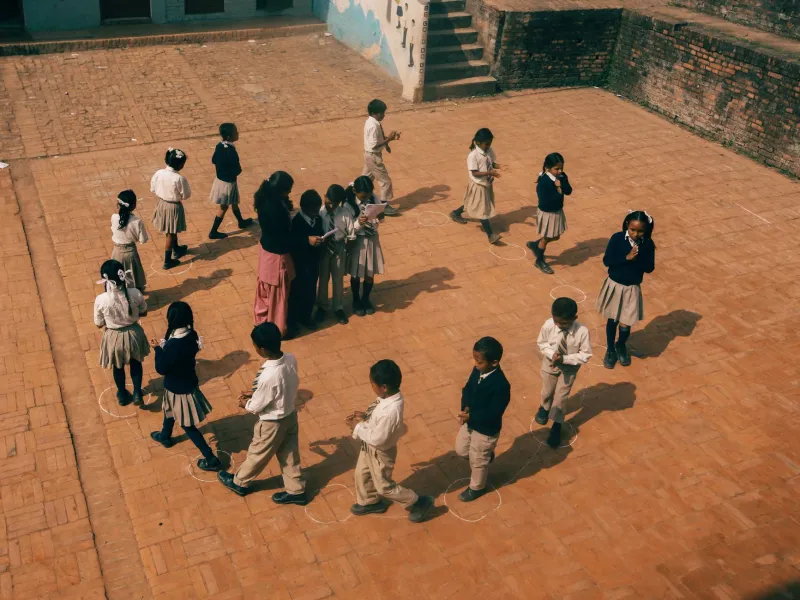
You do not need a contractor to test a design. Buy a tub of playground chalk and a couple of hours of a dry afternoon, and draw the proposed layout at full size on the actual tarmac. Then watch it for two weeks. You will learn more from a fortnight of real breaktimes than from any catalogue photo of smiling children mid-hop. Chalk washes away; a bad £4,000 marking does not.