Six Zones, One Afternoon: Turning Your School Playground Into a Whole-School Maths Festival
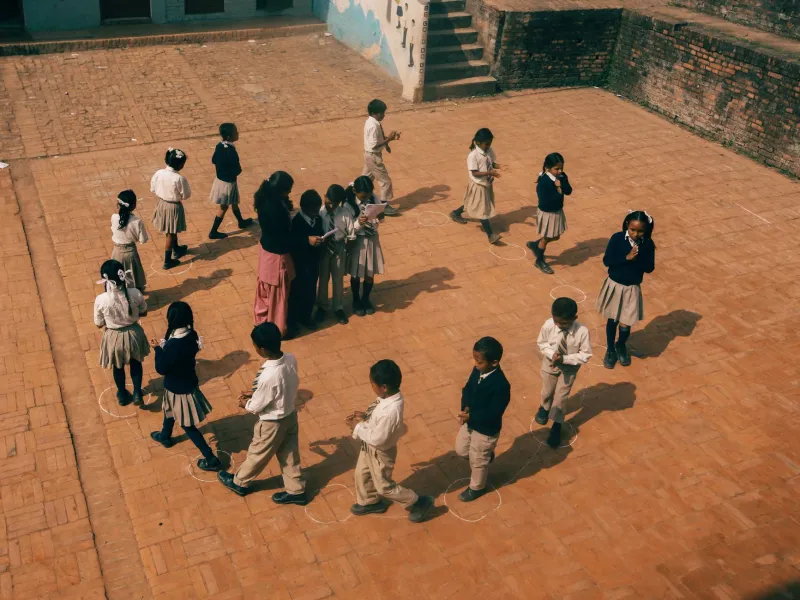
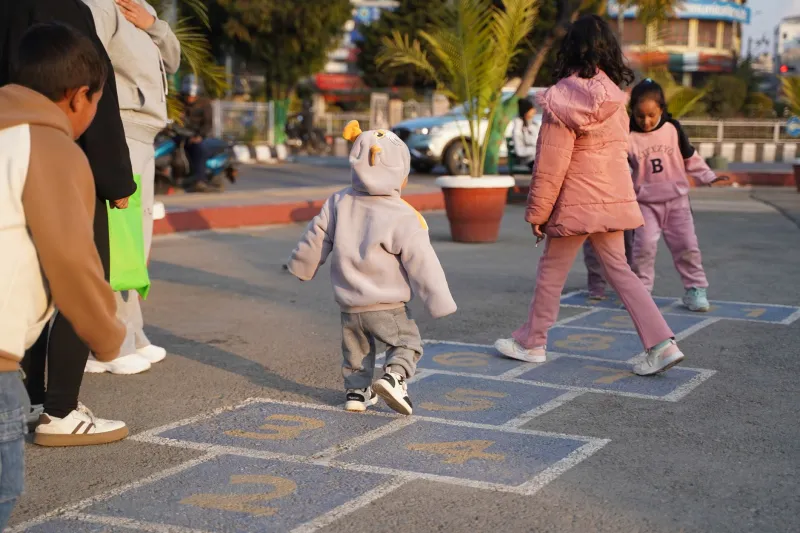
Walk across most primary playgrounds at break and you'll spot maths happening already. Someone's chalking a hopscotch grid, a group is arguing about whose turn it is (that's sequencing, whether they know it or not), and a Year 3 child is pacing out the distance between two drain covers. The maths is there — it just hasn't been given a name badge.
A maths festival is mostly a labelling exercise. You pick an afternoon, fence off a few patches of tarmac, hand out some laminated cards and let the children get on with it. No leaderboard. No house points. No raffle ticket for the fastest child in Year 5.
Here's how to run one without it swallowing your half-term.
Start with the ground you've already got
Don't design six zones from scratch. Walk the playground with a clipboard and mark what's already usable: netball markings (angles, circles, halves), a hopscotch grid, a trim trail for measuring, a wall for shadow-tracking, a bench for a puzzle station. If your playground is a bare rectangle, chalk and cones will do the job — a zone is defined by a card and an adult, not by equipment.
Six zones, roughly ten to fifteen minutes each, works out at about ninety minutes of activity. That's one afternoon with a comfort break. More than six and the children spend the whole time queueing.
The six zones, and what goes on the card
Every station gets one A5 card, laminated if the forecast is British. Each card carries four headings: You need, What to do, Make it trickier, Make it easier. That last heading matters more than the third one — it's what lets a Reception child and a Year 6 child share the same patch of tarmac.
- Counting zone. Scattered cones, beanbags or pebbles. Card: Estimate how many. Then count in twos, fives or tens. Can you arrange them so someone else can count them faster? Seniors get a second card: record your estimate and the actual number, then work out the difference.
- Shape zone. Chalk, string, sticks, a camera if you have one. Card: Build the biggest triangle you can out of string. Is it still a triangle if it's wobbly? Find three right angles in the playground.
- Strategy zone. Noughts and crosses on a chalk grid, a giant version of Nim with counters, or a simple pick-up game. Card: Play twice. Before the second game, agree a plan. Did it work? The talking is the point, not the winning.
- Measurement zone. Metre sticks, a trundle wheel, a tape measure, a jug of water and a bucket. Card: How many of your own feet long is the netball court? Which is longer — five of your strides or five of your friend's?
- Chance zone. Dice, a spinner, a coin, a bag of coloured counters. Card: Pick a counter without looking. Predict first, then test. Do twenty goes. What surprised you?
- Logic zone. Seating-question cards, a sorting hoop, a small set of clues. Card: Three children, three coats, three colours. Work out who owns what using only the clues. One clue is a red herring.
Print the cards double-sided with the easier version on the back. That single decision saves you two hundred conversations on the day.
A timetable that survives contact with real children
Two models work. The rotation model suits larger schools: each class gets a fifteen-minute slot per zone, six slots, a whistle between each. It's orderly, it's fair, and it needs six adults standing in fixed spots all afternoon.
We'd argue for the free-flow model for anything under about 250 pupils. Classes come out in two waves, each with a passport (a folded A4 sheet with six boxes). Children choose their own order, stamp or tick a box at each zone, and drift back inside when the whistle goes. Chaos is possible but brief, and the autonomy is half the appeal — children who choose their zone stay longer and argue about the maths more.
Build in a ten-minute buffer. Always. Something will spill.
KS1 and KS2: same zone, different question
The mistake schools make is running two separate festivals. One set of stations, two sets of cards is cheaper and better. Reception and Year 1 want counting, sorting, comparing and building — questions with a physical answer they can point at. Years 3 to 6 want recording, predicting and explaining, so their cards ask them to write something down or convince a partner.
If you've mixed-age classes, put both cards on the same post. Older children will read the harder one and feel seen; younger ones can ignore it entirely.
Briefing the grown-ups in twenty minutes
Parent volunteers are brilliant and reliably terrified of saying the wrong thing. Give them a fifteen-minute briefing on the morning of the event, and put these five lines on the back of their lanyard:
- Ask a question, don't give an answer.
- "Tell me how you got that" beats "nearly".
- Wrong answers get a "say more about that".
- Send children to another zone if they're stuck — moving is not failing.
- No scores, no rankings, no "who's winning?".
Pair each volunteer with a teaching assistant or a Year 6 helper if you can. It halves the nerves and gives the older children something genuinely responsible to do.
The kit list, priced honestly
You probably own most of this: chalk, cones, beanbags, dice, counters, string, a tape measure, laminated cards, and a clipboard per zone. If you need to buy, a box of chalk, a bag of mixed counters, three cheap tape measures and a set of large dice will set you back roughly the price of two pizzas. The most expensive item on the list is the laminator pouches, and a staffroom laminating rota sorts that out.
Before you spend anything, ask the secondary school up the road or the local scout group. Trundle wheels and giant dice migrate between schools constantly.
Making sure nobody watches from the wall
The festival only works if the children who find maths hardest are in the middle of it, not on the edge. A few things help:
- No eliminations. Nobody sits out a round, ever. If a game can't run without knocking people out, change the game.
- Pairing, not soloing. Two children per task means a cautious child can contribute one idea rather than perform.
- A quiet zone. One bench, a card of puzzles, no whistle. Some children need the option of a low-noise patch of playground, and plenty of neurodivergent pupils will use it.
- Chalk-friendly surfaces. Children with mobility aids or wheelchairs need a zone they can reach — low tables, ground-level chalk, no steps to the trim trail.
- Reading support. Cards in large print, and a Year 6 reading buddy at the counting zone.
- No prizes. Stamps on a passport, a certificate for the class, a mention in assembly. The moment there's a prize for finishing first, the slowest thinker in the year group is out of the game before lunch.
After the whistle
Keep the passport sheets — they're a snapshot, not an assessment, but they tell you which zones children returned to and which they avoided. Keep the cards too; most of them work perfectly well as an ordinary Friday breaktime activity. That's the quiet win of a festival: the afternoon ends, but the zones stay open.
One last tip. Book the date, then tell the children it's happening. Let them suggest a zone. The best station at any maths festival we've seen was a Year 4 invention called "Guess My Number In Ten Questions", run entirely by the children, with a card they wrote themselves.