Till-Roll Sprint: The Kitchen-Table Maths Contest Hiding in Your Shopping Bag
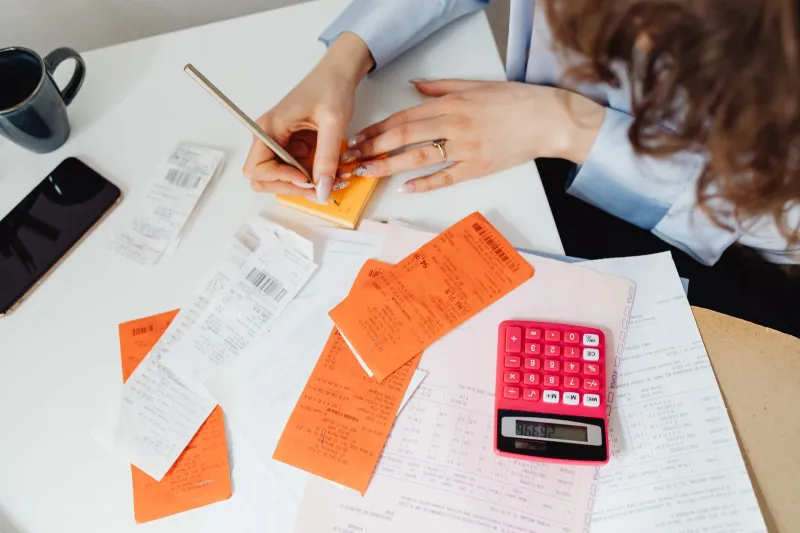
Your weekly shop already comes with a free maths kit: the receipt. Before the bags are unpacked and the freezer door starts beeping, you can turn that till roll into a 20-minute family tournament. No app, no worksheet, no announcement that sounds like homework. Just a receipt, a pen, a few coins and a scorecard.
The basic setup: one receipt, two teams, twenty minutes
Choose a receipt that is going in the bin anyway. Black out your address, loyalty number and any payment details if you are keeping it. Lay it flat on the kitchen table. Split into two teams — or play one adult against one child if that is how your household rolls. You need a pen each, a scrap of paper and the scorecard below. The receipt does the rest.
Play in relay style: each player takes one challenge, writes the answer, then passes the receipt to the next person. The referee — often the adult who is not cooking — checks the answer and awards points. Keep the pace light. A timer is optional, and only for the tidy-up round; nobody needs a countdown breathing down their neck while they compare pence.
Round 1: Total Hunt. Before anyone looks at the bottom line, each team estimates the shop total. Closest estimate gets two points. Then find the actual total and count the number of items. One point for each correct answer.
Round 2: Pound Rounding. Take five prices from the receipt and round each to the nearest pound. Add your rounded prices together. The team closest to the real total of those five items gets three points. This is where KS1 players can shine with a number line.
Round 3: Unit Price Duel. Pick two similar items — two cereals, two yoghurts, two bags of pasta. Use the unit price printed on the receipt or the shelf label if you have it. Which is better value per 100g or per 100ml? Two points for the right answer, one bonus point for explaining how they know.
Round 4: Offer Detective. Look for multibuys, meal deals and savings lines. Ask: was the offer actually good value for this shop? One point for finding an offer, one for a sensible reason.
Final round: Receipt Sprint. Fire quick questions at the opposite team: Which item cost the most? Which cost the least? Find something between £2 and £3. What is the difference between the two cheapest items? One point per correct answer. First to ten points wins — or just finish the receipt and call it a draw.
KS1 variation: numbers you can touch
For younger children, strip it back to recognising numbers and comparing amounts. Use a highlighter to mark every price under £5. Ask them to find the most expensive item, count the items, or match a price to real coins from a purse. Rounding can be done with a simple number line from £1 to £2: is £1.40 closer to £1 or £2? Keep the language playful: 'Which price is the big boss?' 'Can you spot a price with a 9 in the pence?' Points for effort and explanation as much as correct answers.
KS2 variation: decimals, differences and best value
Older children can handle the messy middle of real receipts: decimals, subtraction across pounds and pence, and multi-step problems. Ask them to calculate change from £20, find the difference between the most and least expensive items, or work out whether a multibuy really saves money. A strong challenge is to estimate the total before looking, then compare the estimate with the actual figure. For a stretch, choose three items and work out their average price. Award two points for a correct method even if the final number slips.
The printable scorecard
Copy this table onto paper or print it. There is no need for colour or laminating — a biro and the back of an envelope work fine.
| Round | KS1 challenge | KS2 challenge | Points |
|---|---|---|---|
| Total Hunt | Find the total and count items | Estimate total, then check | 2 + 1 |
| Pound Rounding | Round three prices to nearest £1 | Round five prices, add them, compare | 3 |
| Unit Price Duel | Which item costs more? | Which is better value per 100g/ml? | 2 + 1 bonus |
| Offer Detective | Find a saving or multibuy | Decide if the offer was worth it | 2 |
| Receipt Sprint | Three quick questions | Five quick questions | 1 each |
| Team total |
Tips for a game that does not feel like homework
- Stop while it is still fun. Twenty minutes is plenty; ten is fine.
- Let the child be referee for a round. Checking someone else's answer is maths too.
- Ask 'how did you get that?' before saying right or wrong.
- Use coins for KS1. A pile of 1p, 2p, 5p and 10p coins makes rounding physical.
- Keep receipts private. Black out personal details and do not post clear photos online.
- Play with receipts headed for recycling, not the ones you need for a return.
- Have a small prize? A biscuit or choosing the next film is enough. Avoid turning points into pocket money every week; the game is the treat.
Busy-week versions
If your shop is delivered, print the order summary or use the paper delivery note, then write the key numbers on a sheet so the game stays screen-free. If you only have a tiny receipt, play one round. If you have several receipts, make a deck and let teams choose their challenge. And if the shopping is already half unpacked, try the car-park version: everyone estimates the total from memory before the receipt disappears into the recycling.
At Math Playgrounds, we like games that start with what is already on the table. This one costs nothing, takes minutes to set up, and gives children a reason to care about a decimal point that is not on a worksheet.